

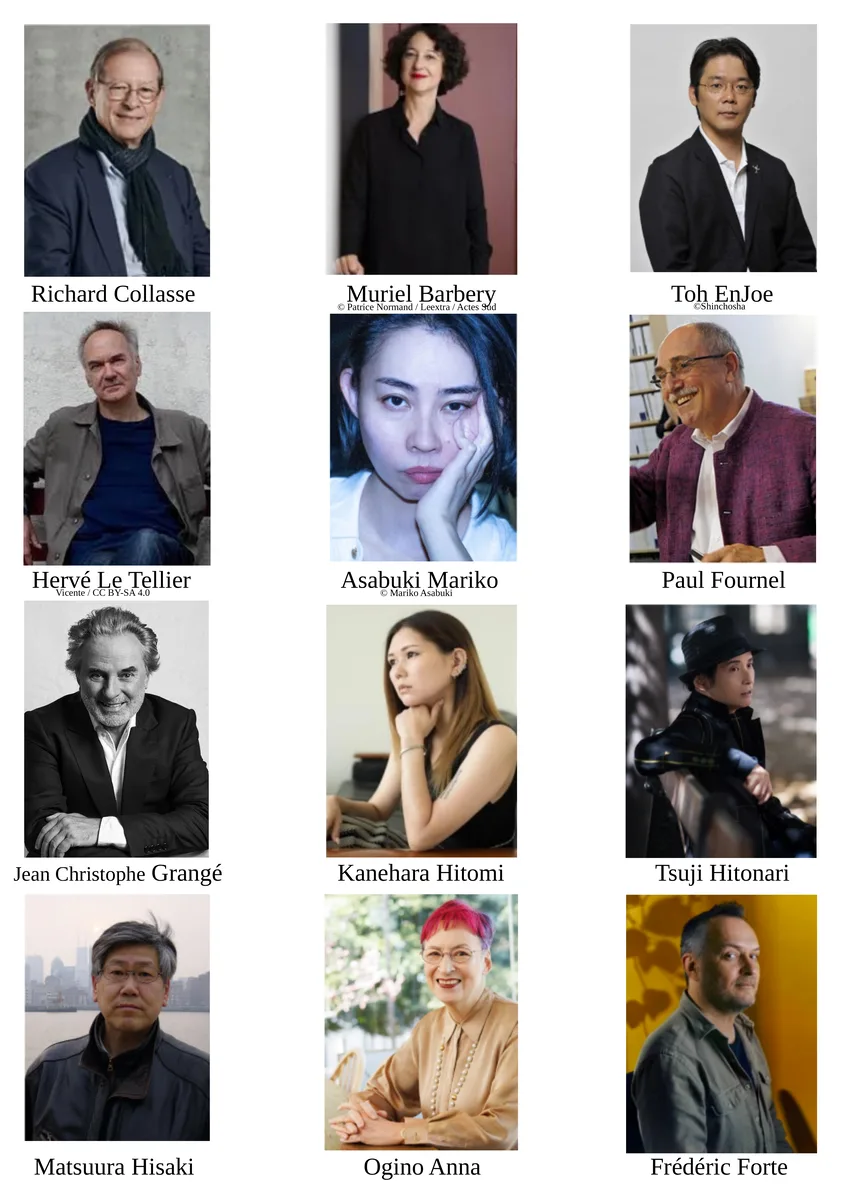

Anna Ogino
荻野アンナ
Anna Ogino
Pour Anna Ogino (荻野アンナ), le rire est une affaire sérieuse — et François Rabelais, une vieille connaissance.
Née d'une mère japonaise et d'un père franco-américain, formée à Keio puis à la Sorbonne, elle a passé sa carrière à faire circuler l'humour entre le japonais et le français avec une aisance qui n'appartient qu'à elle.
Lauréate du prix Akutagawa en 1991 pour Seoi-mizu (背負い水), du Prix Yomiuri en 2001 pour Horafuki Anri no bōken (ホラ吹きアンリの冒険) et du Prix Itō Sei en 2008 pour Kani to kare to watashi (蟹と彼と私),
elle construit une œuvre où la parodie et l'ironie brouillent les frontières entre auteur, narrateur et texte.
On ne sait jamais tout à fait qui parle — et c'est précisément là qu'elle nous entraîne.
Romancière, traductrice, professeure émérite à l'université Keio : un pont vivant entre deux littératures, et entre deux façons de trouver le monde drôle.
荻野アンナにとって、ユーモアは本気で向き合うべきものだ——そしてフランソワ・ラブレーは、古くからの知人である。
日本人の母とフランス系アメリカ人の父のあいだに生まれ、慶應義塾大学とソルボンヌ大学で学んだ彼女は、日本語とフランス語のあいだでユーモアを往復させることに、作家としての歩みを捧げてきた——彼女ならではの軽やかさで。
1991年に『背負い水』で芥川賞、2001年に『ホラ吹きアンリの冒険』で読売文学賞、2008年に『蟹と彼と私』で伊藤整文学賞を受賞。
パロディと皮肉を自在に行き来しながら、作者・語り手・テキストの境界を揺さぶる作品世界を築いてきた。
いったい誰が語っているのか——最後までわからない。そして、まさにその場所へと、彼女は私たちを連れていく。
小説家、翻訳家、慶應義塾大学名誉教授。二つの文学、そして世界をユーモラスに捉える二つの感性をつなぐ、稀有な存在であり続けている。
For Anna Ogino (荻野アンナ), laughter is a serious matter — and François Rabelais an old acquaintance.
Born to a Japanese mother and a Franco-American father, educated at Keio University and then at the Sorbonne, she has spent her career moving humour between Japanese and French with an ease entirely her own.
Winner of the Akutagawa Prize in 1991 for Seoi-mizu (背負い水), the Yomiuri Prize in 2001 for Horafuki Anri no bōken (ホラ吹きアンリの冒険), and the Itō Sei Prize in 2008 for Kani to kare to watashi (蟹と彼と私), she has built a body of work in which parody and irony blur the boundaries between author, narrator and text.
One never quite knows who is speaking — and that is precisely where she leads us.
Novelist, translator, professor emerita at Keio University: a living bridge between two literatures, and between two ways of finding the world funny.
.webp) © 新潮社
© 新潮社
Toh EnJoe
円城塔
Toh EnJoe
Il a commencé par la physique. Puis les mots ont pris le relais — sans vraiment changer de méthode.
Né à Sapporo en 1972, Toh EnJoe (円城塔) étudie la physique à l'université de Tohoku, puis obtient un doctorat à l'université de Tokyo sur les langages naturels abordés par les mathématiques.
Sept ans de recherche postdoctorale, un passage dans une société de logiciels, avant d'abandonner la carrière académique en 2007 pour l'écriture — qu'il aborde avec la même rigueur déstabilisatrice.
Lauréat du prix Akutagawa en 2012 pour Dōkeshi no chō (道化師の蝶) et du Prix spécial Nihon SF Taishō la même année, il reçoit en 2025 le Prix Yomiuri pour Code Buddha, confirmant une œuvre aussi inclassable que cohérente.
Entre science-fiction, jeux linguistiques et théorie, il est aujourd'hui l'une des voix les plus déroutantes de la littérature japonaise.
Ce qui, pour lui, est clairement un compliment.
物理学から出発した。やがて言葉がその役割を引き継ぐ——方法はほとんど変わらないまま。
1972年札幌生まれ。東北大学で物理学を学び、数学から自然言語に迫る研究で東京大学の博士号を取得。
7年にわたるポスドク研究、ソフトウェア会社での勤務を経て、2007年に学術の道を離れ、執筆へと向かう——同じ、読者を揺さぶるほどの厳密さで。
2012年、『道化師の蝶』で芥川賞および日本SF大賞特別賞を受賞。2025年には『コード・ブッダ』で読売文学賞を受賞し、分類不能でありながら確かな一貫性を持つ作品世界を築いてきた。
SF、言語遊戯、理論のあいだを軽やかに往還しながら、日本文学のなかでもひときわ異彩を放つ存在となっている。それは彼にとって、紛れもなく褒め言葉だ。
He began with physics. Then words took over — without really changing method.
Born in Sapporo in 1972, Toh EnJoe (円城塔) studied physics at Tohoku University before completing a doctorate at the University of Tokyo on natural languages approached through mathematics.
Seven years of postdoctoral research, a stint in a software company, before leaving academia in 2007 for writing — which he approaches with the same unsettling rigour.
Winner of the Akutagawa Prize in 2012 for Dōkeshi no chō (道化師の蝶), and of the Special Prize at the Nihon SF Taishō Award the same year, he received the Yomiuri Prize in 2025 for Code Buddha, confirming a body of work as unclassifiable as it is coherent.
Between science fiction, linguistic play and theory, he is now one of the most disorienting voices in Japanese literature.
To him, it's clearly a compliment.
 © Mariko Asabuki
Mariko Asabuki
朝吹真理子
Mariko Asabuki
Mariko Asabuki (朝吹真理子) écrit dans les espaces que les autres laissent blancs — les silences entre les êtres, les infimes déplacements de la mémoire, ce qui se tisse dans l'ombre autant que dans la lumière.
Née à Tokyo en 1984 dans une famille littéraire enracinée depuis l'ère Meiji — son père est poète, plusieurs proches sont traducteurs ou chercheurs en littérature —, elle grandit entourée de langue.
Formée à la littérature japonaise à l'université Keio, elle publie son premier roman, Ryūseki (流跡), en 2009, alors qu'elle est encore étudiante. Le Prix Bungei Deux Magots couronne ce début ; deux ans plus tard, Kikotowa (きことわ) lui vaut le prix Akutagawa en 2011 — récit porté par une attention constante au rythme et à la musicalité du langage.
Elle collabore régulièrement avec des artistes, notamment des musiciens, comme si l'écriture seule ne suffisait pas à contenir ce qu'elle entend.
朝吹真理子が書くのは、他者が余白として残していく空間だ——人と人のあいだにひそむ沈黙、記憶のかすかな揺らぎ、光と影のあいだで静かに織りなされるもの。
1984年東京生まれ。明治期から続く文学的な家系に育ち、父は詩人、周囲には翻訳家や文学研究者が多い。言葉に囲まれて育った。
慶應義塾大学で日本文学を学び、在学中の2009年に『流跡』を発表。文藝賞、ドゥ・マゴ文学賞を受賞し、2011年には『きことわ』で芥川賞を受賞——言語のリズムと音楽性への繊細な感覚が、作品全体を静かに貫いている。
音楽家をはじめとするアーティストとのコラボレーションも重ねてきた。まるで、書くことだけでは収まりきらないものが、別のかたちで響きを求めているかのように。
Mariko Asabuki (朝吹真理子) writes in the spaces others leave blank — the silences between people, the slightest shifts of memory, what takes shape as much in shadow as in light.
Born in Tokyo in 1984 into a literary family rooted in the Meiji era — her father a poet, several close relatives translators or scholars of literature —, she grew up surrounded by language.
Educated in Japanese literature at Keio University, she published her first novel, Ryūseki (流跡), in 2009, while still a student. The Prix Bungei Deux Magots marked this debut; two years later, Kikotowa (きことわ) earned her the Akutagawa Prize in 2011 — a work sustained by a constant attention to rhythm and the musicality of language.
She collaborates regularly with artists, especially musicians, as though writing alone were not enough to contain what she hears.
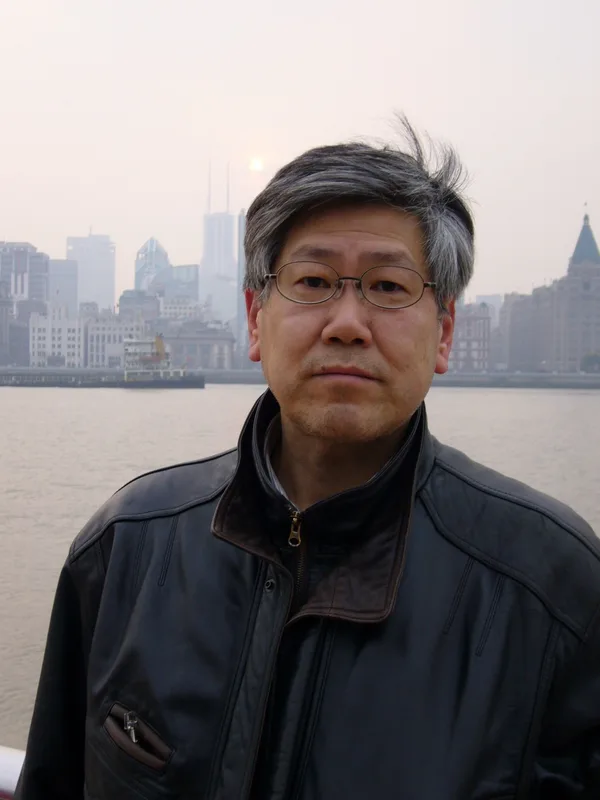
Hisaki Matsuura
松浦寿輝
Hisaki Matsuura
Hisaki Matsuura (松浦寿輝) est de ces écrivains pour qui sentir et penser ne font qu'un.
Spécialiste de Charles Baudelaire, formé à Tokyo puis à la Sorbonne, poète avant d'être romancier, il développe une œuvre où le désir, la mémoire et la perception s'articulent dans une langue d'une précision rare.
Prix Akutagawa en 2000 pour Hana kutashi (花腐し), Prix Yomiuri en 2004 pour Hantō (半島), Prix Tanizaki en 2017 pour Meiyo to Kōkotsu (名誉と恍惚) — une trajectoire qui dit moins une carrière qu'une exigence maintenue sur la durée.
Professeur émérite à l'université de Tokyo, essayiste sur la littérature, le cinéma et l'architecture, il continue d'explorer les résonances entre pensée occidentale et esthétique japonaise.
Un écrivain dont la rigueur n'exclut rien — surtout pas la sensualité.
松浦寿輝は、感じることと考えることが分かちがたく結びついた作家である。
シャルル・ボードレール研究者として東京とソルボンヌで学び、詩人として出発したのち、小説家として独自の作品世界を築いてきた。そこでは、欲望・記憶・知覚が、稀有な精度を持つ言語のなかで静かに響き合っている。
2000年に『花腐し』で芥川賞、2004年に『半島』で読売文学賞、2017年に『名誉と恍惚』で谷崎潤一郎賞を受賞。キャリアというより、長年にわたって自らに課し続けた要求の軌跡である。
東京大学名誉教授。文学・映画・建築にわたる批評やエッセイを通して、西洋思想と日本的美学のあいだに生まれる響きを探り続けている。
何ひとつ排除しない厳密さ——とりわけ、官能性さえも。
Hisaki Matsuura (松浦寿輝) is one of those writers for whom feeling and thought are one.
A specialist in Charles Baudelaire, educated in Tokyo and then at the Sorbonne, a poet before becoming a novelist, he has developed a body of work in which desire, memory and perception take shape in a language of rare precision, always on the edge of sensation.
Winner of the Akutagawa Prize in 2000 for Hana kutashi (花腐し), the Yomiuri Prize in 2004 for Hantō (半島), and the Tanizaki Prize in 2017 for Meiyo to Kōkotsu (名誉と恍惚) — a trajectory that speaks less of a career than of a sustained rigour.
Professor emeritus at the University of Tokyo, essayist on literature, cinema and architecture, he continues to explore the resonances between Western thought and Japanese aesthetics.
A writer whose rigour excludes nothing — least of all sensuality.

Hitomi Kanehara
金原ひとみ
Hitomi Kanehara
Elle avait vingt ans et aucune intention d'adoucir quoi que ce soit.
Le premier roman d'Hitomi Kanehara (金原ひとみ), Hebi ni piasu (蛇にピアス — Serpent et piercing), explorait le corps, la douleur et l'identité avec une franchise qui a immédiatement tout changé.
Prix Subaru en 2003, prix Akutagawa en 2004 — consécration immédiate pour une voix qui n'en avait pas vraiment besoin pour s'imposer.
Depuis, plus de vingt ans d'une œuvre exigeante, ancrée dans le présent, attentive aux fractures intimes et aux formes contemporaines de marginalité, couronnée par le prix Tanizaki en 2021 pour Ansōsharudisutansu (アンソーシャルディスタンス).
Installée un temps en France avant de revenir au Japon, traduite dans de nombreuses langues — elle n'a jamais cherché à plaire, et c'est peut-être pour ça qu'on la lit.
彼女は二十歳で、何ひとつ和らげるつもりはなかった。
デビュー作『蛇にピアス』は、身体、痛み、アイデンティティを、すべてを変えてしまうほどの率直さで描き出した。
2003年にすばる文学賞、2004年に芥川賞を受賞——その声は、もともと賞など必要としていなかったかのように、すでに強く響いていた。
それから二十年以上、現在に根ざしながら、内面の亀裂や現代的な孤立のかたちに向き合い続けてきた。2021年には『アンソーシャルディスタンス』で谷崎潤一郎賞を受賞。
一時期フランスに暮らし、現在は日本を拠点に活動。作品は多くの言語に翻訳されている。
彼女はこれまで一度も、誰かに好かれようとして書いてきたわけではない。
——それでも、読まれ続けている。
She was twenty and had no intention of softening anything.
Her first novel, Snakes and Earrings (Hebi ni piasu, 蛇にピアス), explored the body, pain and identity with a directness that changed everything.
Winner of the Subaru Prize in 2003 and the Akutagawa Prize in 2004 — immediate recognition for a voice that had no real need of it to make its mark.
Since then, more than twenty years of an uncompromising body of work, rooted in the present, attentive to intimate fractures and contemporary forms of marginality, crowned by the Tanizaki Prize in 2021 for Ansōsharudisutansu (アンソーシャルディスタンス).
Based for a time in France before returning to Japan, translated into numerous languages — she has never sought to please. Which may be precisely why we read her.

Hitonari Tsuji
辻仁成
Hitonari Tsuji
Chez lui, l'écriture avance au plus près de l'intime.
Romancier majeur de la littérature japonaise contemporaine, Hitonari Tsuji (辻仁成) développe depuis près de quarante ans une œuvre profondément marquée par l'exploration de la solitude, de l'amour, de la mémoire et de l'exil.
Son écriture, à la fois épurée et sensible, interroge les liens fragiles entre les êtres et la manière dont les lieux les façonnent.
Il reçoit en 1989 le prix littéraire Subaru pour Pianissimo, puis en 1997 le prestigieux prix Akutagawa pour La Lumière du détroit.
En 1999, Hakubutsu (Le Bouddha blanc) est récompensé par le prix Femina étranger, consacrant sa reconnaissance internationale et son inscription durable dans le paysage littéraire français.
Traduites et publiées dans de nombreux pays, ses œuvres ont touché un large public international.
Installé aujourd'hui en Normandie, Hitonari Tsuji incarne une figure rare du dialogue littéraire entre le Japon et la France.
彼の書くものは、内面へと限りなく近づいていく。
現代日本文学を代表する小説家のひとりとして、辻仁成は四十年近くにわたり、孤独、愛、記憶、そして異郷をめぐる探求を重ねてきた。
その文体は、簡潔でありながら繊細で、人と人とのあいだにある脆い結びつきや、場所が人をどのように形づくるのかを静かに問い続けている。
1989年に『ピアニシモ』ですばる文学賞、1997年に『海峡の光』で芥川賞を受賞。
1999年には『白仏』がフェミナ賞外国語部門を受賞し、国際的な評価を確かなものとした。
作品は多くの国で翻訳され、広く読まれている。
現在はノルマンディーを拠点に活動。
日本とフランス、そのあいだにある文学的な往還を体現する存在である。
In his work, writing draws closer to the intimate.
A major figure in contemporary Japanese literature, Hitonari Tsuji (辻仁成) has spent nearly forty years developing a body of work shaped by the exploration of solitude, love, memory and exile.
His writing, at once spare and sensitive, explores the fragile bonds between people and the way places shape them.
He received the Subaru Prize in 1989 for Pianissimo, and in 1997 the prestigious Akutagawa Prize for La Lumière du détroit. In 1999, Hakubutsu (Le Bouddha blanc) was awarded the Prix Femina étranger, confirming his international recognition and his lasting place in the French literary landscape.
Translated and published in many countries, his work has reached a wide international readership.
Now based in Normandy, he remains a rare figure of literary dialogue between Japan and France.
 © 大槻志穂 (Otsuki Shiho)
Kaori Ekuni
江國香織
Kaori Ekuni
Elle écrit comme on observe — avec une attention douce et précise aux choses qui passent inaperçues.
Née à Tokyo en 1964, fille du poète Shigeru Ekuni, Kaori Ekuni (江國香織) grandit dans une maison où la langue était déjà une façon d’habiter le monde.
Son roman Kira Kira Hikaru (1991) l’impose comme l’une des grandes voix féminines de sa génération — le prix Murasaki Shikibu, puis le Naoki, puis le Tanizaki viendront confirmer ce que les lecteurs avaient déjà pressenti.
Depuis, elle explore les relations humaines, la perte et les formes contemporaines de la solitude, avec délicatesse et une légèreté singulière, au fil d’une œuvre abondante traduite dans de nombreuses langues et appréciée bien au-delà des frontières nipponnes.
En France, publiée aux éditions Philippe Picquier, où plusieurs de ses livres ont trouvé leurs lecteurs, dont Dans la barque de Dieu.
Une œuvre qui s’est imposée dans la durée — livre après livre.
人々が観察するように文章を書く。見過ごされがちな事柄に対する配慮と細密な注意をもって。
1964年東京生まれ。父は詩人の江國滋。言葉が世間を生きる方法の一つである家庭で育つ。
小説『きらきらひかる』(1991年)で、同世代の声を代表する作家の一人としての地位を確立する。紫式部賞、直木賞、そして谷崎賞の受賞は、読者がすでに予感していたことを裏付けるものとなる。
以降、人間関係、喪失、現代的な孤独の形について、繊細さと独特の軽やかさで探求。数々の作品は多くの言語に翻訳され、国外でも広く愛されている。
フランスではフィリップ・ピキエ社から出版されており、『神様のボート』をはじめとする著作の多くが読者の支持を得ている。
著書の数々は、一冊、また一冊と、時間をかけて確固たる地位を築いていく。
She writes the way one observes — with a gentle, precise attention to what usually goes unnoticed.
Born in Tokyo in 1964, the daughter of poet Shigeru Ekuni, Kaori Ekuni grew up in a home where language was already a way of inhabiting the world.
Her novel Kira Kira Hikaru (1991) established her as one of the leading female voices of her generation — the Murasaki Shikibu Prize, followed by the Naoki Prize and the Tanizaki Prize, confirmed what readers had already sensed.
Since then, she has explored human relationships, loss, and contemporary forms of solitude with delicacy and a singular lightness, through a prolific body of work translated into many languages and widely appreciated beyond Japan.
In France, she is published by Éditions Philippe Picquier, where several of her books have found their readers, including Dans la barque de Dieu.
A body of work that has established itself over time — one book at a time.
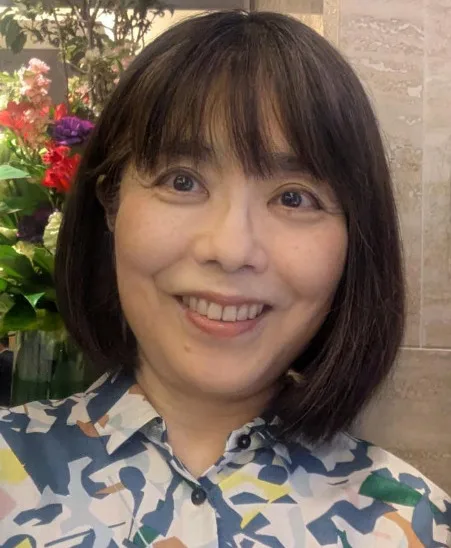
Machi Tawara
俵万智
Machi Tawara
Elle a mis le quotidien en tanka — et le quotidien ne s'en est pas remis.
Née à Osaka en 1962, Machi Tawara (俵万智) étudie la littérature japonaise à l'université Waseda, puis enseigne dans un lycée de Kanagawa — et cette vie d'estrade, de saisons et d'amours ordinaires devient la matière exacte de son écriture.
Son geste est d'une précision rare : prendre le tanka, forme fixe millénaire, et y faire entrer, sans effort apparent, la vie telle qu'elle est — un billet de métro, une chemise qui sèche, une main qui cherche une autre main. La forme classique ne cède pas ; c'est le présent qui s'y installe et qui y tient.
En 1987, L'Anniversaire de la salade provoque ce qu'on appellera le « salad phenomenon » : 2,8 millions d'exemplaires, une célébrité nationale, et pour toute une génération, la révélation que la poésie parlait d'eux.
Depuis, le tanka n’a plus tout à fait la même voix.
日常を短歌で詠むことによって、世間に波紋を投げかけた。
1962年大阪生まれ。早稲田大学で日本文学を学んだのち、神奈川県の高校で教鞭を執る。その頃の、教壇に立つ日々、四季の移ろい、ありふれた恋愛などが、創作の糧となる。
その技法は精緻を極める。千年以上もの歴史を持つ定型詩である短歌を用い、一見何の苦労もなく、あるがままの生活――地下鉄の切符、干してあるシャツ、誰かの手を探す手――を落とし込む。古典的な形式を崩さずに「今」を織り込む。
1987年出版の『サラダ記念日』は、のちに「サラダ現象」と呼ばれるブームを巻き起こした。280万部を売り上げ、全国に名を轟かせ、若い世代に、歌が自分たちのことを語っているという気づきをもたらした。
以来、短歌は昔のそれとは異なるものとなった。
She brought the everyday into tanka — and the everyday was never quite the same again.
Born in Osaka in 1962, Machi Tawara studied Japanese literature at Waseda University before teaching at a high school in Kanagawa — and this life of classrooms, seasons, and ordinary loves became the very substance of her writing.
Her gesture is one of rare precision: to take tanka, a millennia-old fixed form, and allow life as it is to enter it, with no apparent effort — a subway ticket, a shirt drying, a hand reaching for another hand. The classical form does not yield; it is the present that settles into it, and stays.
In 1987, The Salad Anniversary sparked what would be known as the “salad phenomenon”: 2.8 million copies sold, national fame, and for an entire generation, the revelation that poetry could speak about their own lives.
Since then, tanka has never quite had the same voice.
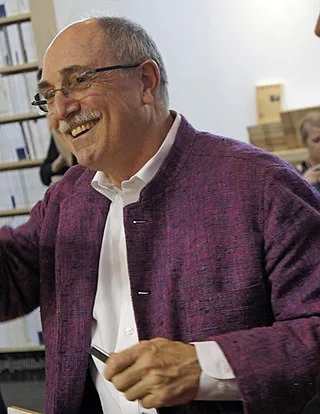
Paul Fournel — OULIPO
ポール・フルネル / OULIPO
Paul Fournel — OULIPO
Paul Fournel a eu plusieurs vies — éditeur, président de la Société des gens de Lettres, attaché culturel au Caire et à Londres, directeur de l'Alliance française à San Francisco — et il les a toutes menées en même temps qu'une carrière littéraire d'une diversité étourdissante : romans, nouvelles, poésie, théâtre, essais, chroniques cyclistes.
Car le vélo est l'autre grand fil conducteur : il en parle aussi bien qu'il écrit — et il écrit beaucoup.
Mais chez lui, tout part du langage — de ce qu'il permet, de ce qu'il déplace, de ce qu'il invente. Membre de l'Oulipo depuis les années 1970, dont il fut longtemps l'un des piliers, il explore les contraintes comme d'autres explorent un territoire.
La Liseuse, son roman sur le monde de l'édition à l'heure du numérique, a été traduit en japonais.
C'est un écrivain qui sait qu'une contrainte, bien choisie, libère tout.
編集者の経歴を持つほか、Société des gens de lettres(フランス文学家協会)会長、カイロおよびロンドンのフランス大使館文化アタシェ、サンフランシスコのアリアンス・フランセーズ所長を歴任。そのような要職と並行して、小説、短編、詩、戯曲、エッセイ、サイクリングコラムなど、驚くほど多様な執筆活動を行っている。
なかでも自転車は彼の活動を貫く大きなテーマの一つだ。彼は自転車について話しもするし書きもする。頗る書く。
彼にとって、すべては言葉から始まる。言葉が可能にするもの、言葉が動かすもの、言葉が生み出すものから始まる。1970年代にOulipoの会員となり、長きにわたりその支柱の一人であった彼は、他者が陸地を探検するように制約を探求する。
デジタル時代の出版界を描いた小説『La liseuse』は日本語に翻訳された。邦題は『編集者とタブレット』。
Paul Fournel has lived several lives — publisher, president of the Société des gens de Lettres, cultural attaché in Cairo and London, director of the Alliance Française in San Francisco — and all of them alongside a literary career of remarkable breadth: novels, short stories, poetry, theatre, essays, and cycling chronicles.
Cycling is the other great thread running through his work: he writes about it as well as he rides — and he writes a great deal.
But everything, with him, begins with language — what it allows, what it shifts, what it invents. A member of Oulipo since the 1970s, long one of its central figures, he explores constraints as others would a territory.
La Liseuse, his novel on the world of publishing in the digital age, has been translated into Japanese.
He is a writer who knows that a well-chosen constraint can set everything free.
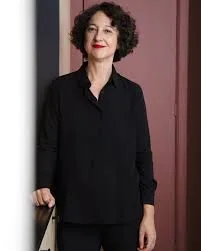 © Patrice Normand / Leextra / Actes Sud
Muriel Barbery
ミュリエル・バルベリー
Muriel Barbery
Elle écrit comme on ouvre un monde — un monde à part, attentif aux détails, aux silences, à une certaine idée de la beauté.
Née à Casablanca, Muriel Barbery grandit en France et étudie la philosophie à l'École Normale Supérieure avant de l'enseigner. Son premier roman, Une Gourmandise (2000), est suivi du succès mondial de L'Élégance du hérisson (2006), traduit dans plus de quarante langues et vendu à plus de 12 millions d'exemplaires.
Elle choisit alors de vivre deux ans au Japon — une expérience qui marque profondément son imaginaire. Elle y puise la matière de plusieurs romans, dont Une rose seule et Une heure de ferveur (Actes Sud), où la prose se resserre, plus attentive au silence qu'à l'éclat.
Son dernier roman, Thomas Helder (2024), s'inscrit dans cette veine.
彼女の文章は、まるで新たな世界——ディテール、静けさ、そしてある種の美の概念に意を注ぐ別個の世界の扉を開く。
カサブランカ生まれ、フランス育ち。ENS(高等師範学校)で哲学を学び、後に同校で教鞭を執る。処女作『至福の味』(2000年)に続き、世界的な大ヒット作『優雅なハリネズミ』(2006年)を発表。同作は四十カ国語以上に翻訳され、販売部数は1200万部を超える。
その後、日本で二年過ごす。この経験は彼女の想像力に深い影響を与えた。日本での体験をもとに『京都に咲く一輪の薔薇』や『Une heure de ferveur(情熱の一時間)』(アクテ・スュッド刊)など複数の小説を書く。これらの作品では、文章が凝縮され、輝きよりも沈黙に注意が向けられている。
最新作『Thomas Helder(トマス・ヘルダー)』(2024年)もこの流れに連なる。
She writes as one opens onto a world — a world apart, attentive to details, to silences, to a certain idea of beauty.
Born in Casablanca, Muriel Barbery grew up in France and studied philosophy at the École Normale Supérieure before going on to teach it. Her first novel, Une Gourmandise (2000), was followed by the worldwide success of The Elegance of the Hedgehog (2006), translated into more than forty languages and selling over 12 million copies.
She later chose to live in Japan for two years — an experience that left a lasting imprint on her imagination. It became the ground from which several novels emerged, including Une rose seule and Une heure de ferveur (Actes Sud), where her prose tightens, drawing closer to silence than to radiance.
Her most recent novel, Thomas Helder (2024), continues in this vein.
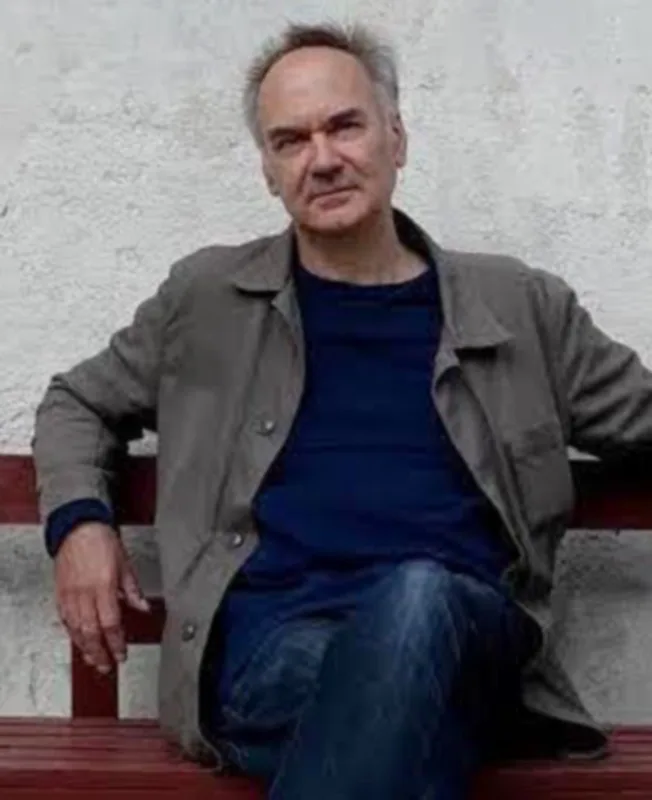 Vicente / CC BY-SA 4.0
Hervé Le Tellier — OULIPO
エルヴェ・ル・テリエ / OULIPO
Hervé Le Tellier — OULIPO
Mathématicien de formation, docteur en linguistique, ancien journaliste scientifique, chroniqueur, poète, dramaturge — Hervé Le Tellier pratique la littérature comme d’autres pratiquent les arts martiaux : avec méthode, et une forme de jubilation tranquille.
Membre de l’Oulipo depuis 1992, dont il est aujourd’hui le président, il lui a consacré un essai de référence, Esthétique de l’Oulipo.
Entre formes brèves et romans de grande ampleur, entre chronique quotidienne au Monde et écriture pour l’opéra, il n’a jamais vraiment choisi — et c’est tant mieux. Ses livres traversent les genres avec une même exigence ironique.
L’Anomalie (Prix Goncourt 2020) l’a révélé au grand public, confirmant que la littérature peut être à la fois virtuose et jubilatoire. Traduit en japonais aux éditions Hayakawa, le roman a également trouvé ses lecteurs au Japon. Hervé Le Tellier a déjà participé à la première édition, au Canada.
大学では数学を専攻し、言語学の博士号を持つ、元科学ジャーナリスト。コラムニストにして詩人、劇作家でもある彼は、他者が武術を修練するように、すなわち体系的に、平然と、しかし欣然として文学に取り組む。
1992年にOULIPO(潜在的文学工房)の会員となり、現在その会長を務める。同団体に関する指南書とも言えるエッセイ『Esthétique de l’Oulipo(Oulipoの美学)』を著している。
短編か長編小説か、ル・モンド紙のコラムかオペラの台本か、どちらかを選ぶということはしなかった。それでよかったのであろう。著作はジャンルを問わずアイロニーで貫かれている。
『異常—アノマリー』(2020年ゴンクール賞)は彼を広く世に知らしめ、文学が、技巧に富みつつ喜びに満ちたものであり得ることを証明した。邦訳は早川書房から刊行され、日本でも多くの読者を獲得。カナダで開催された第1回Les 24 heures du roman1にも参加。
Trained as a mathematician, with a doctorate in linguistics, a former science journalist, columnist, poet and playwright, Hervé Le Tellier practices literature the way others practice martial arts: with method, and a kind of quiet jubilation.
A member of Oulipo since 1992, of which he is now president, he has devoted to it a landmark essay, Esthétique de l’Oulipo.
Between short forms and large-scale novels, between his daily column in Le Monde and writing for opera, he has never really chosen — and so much the better. His books move across genres with the same ironic exactitude.
L’Anomalie (Prix Goncourt 2020) brought him to a wider public, confirming that literature can be at once virtuoso and deeply pleasurable. Published in Japanese by Hayakawa, the novel has also found its readers in Japan. Hervé Le Tellier had already taken part in the first edition, in Canada.
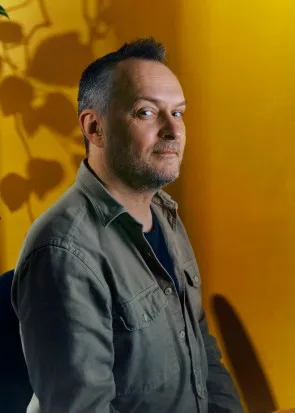
Frédéric Forte — OULIPO
フレデリック・フォルト / OULIPO
Frédéric Forte — OULIPO
Il a commencé par la basse électrique. Puis les mots ont pris le relais — et chez Frédéric Forte, né à Toulouse en 1973, le sens du rythme n'a pas changé de camp : il a simplement trouvé un autre instrument.
Poète, membre de l'Oulipo depuis 2005, profondément marqué par Raymond Queneau, il explore les formes fixes avec la désinvolture d'un musicien de jazz qui connaît les règles par cœur pour mieux les habiter.
Avec le Matricule des Anges, on l'a comparé à Buster Keaton : cette façon de traverser le monde avec un flegme parfait et une malice qui ne se déclare jamais.
Une œuvre abondante, principalement chez P.O.L, dont Nous allons perdre deux minutes de lumière (2021) et Transformation de la condition humaine dans toutes les branches de l'activité (2023).
Ses initiales ? FF — comme formes fixes. Il dit que c'est une coïncidence.
1973年トゥルーズ生まれ。エレキベーシストとしてのキャリアを歩み始めたが、やがて文筆業に転向。ただ、リズムを刻まなくなったわけではない。単に別の楽器を見つけただけだった。
詩人。2005年にOULIPOの会員となる。レモン・クノーの影響を深く受ける。ルールを熟知しそれを自在に操る気まぐれなジャズミュージシャンのように定型詩を探求している。
クールに、かつ決して表に出ることのない悪戯心をもって世の中を渡るその姿勢ゆえに『Le Matricule des Anges』誌でバスター・キートンに譬えられた。
『Nous allons perdre deux minutes de lumière(我々は二分の光を失う)』(2021年)や『Transformation de la condition humaine dans toutes les branches de l'activité(全活動分野における人間条件の変容)』(2023年)など、多くの著書はP.O.L社から出版されている。
名前の頭文字は「FF」だが、「formes fixes(定型詩)」の頭文字と重なる。偶然の一致だよ、と本人は言う。
Born in Toulouse in 1973, Frédéric Forte first played the electric bass. Then words took over — and the sense of rhythm never changed sides: it simply found another instrument.
A poet and member of Oulipo since 2005, deeply influenced by Raymond Queneau, he explores fixed forms with the nonchalance of a jazz musician who knows the rules by heart in order to inhabit them more fully.
In Le Matricule des Anges, he was once compared to Buster Keaton: that way of moving through the world with perfect composure and a mischief that never declares itself.
A substantial body of work, published mainly by P.O.L, including Nous allons perdre deux minutes de lumière (2021) and Transformation de la condition humaine dans toutes les branches de l’activité (2023).
His initials? FF — as in formes fixes. He says it’s a coincidence.

Eduardo Berti — OULIPO
エドゥアルド・ベルティ / OULIPO
Eduardo Berti — OULIPO
Eduardo Berti est né en Argentine, en 1964. Écrivain de langue espagnole, mais aussi de langue française, il vit en France et a été traduit dans plusieurs langues. Autant dire qu'il n'est vraiment de nulle part — ce qui est peut-être la meilleure position pour observer le monde.
Membre de l'Oulipo depuis 2014, il pratique tous les formats avec une égale curiosité : micronouvelles, romans, textes inclassables, inventaires fictifs.
Madame Wakefield — finaliste du prix Femina, traduit en japonais chez Shinchōsha — a montré jusqu'où sa précision pouvait aller.
Ses livres paraissent notamment chez Actes Sud, Flammarion et La Contre Allée, parmi lesquels Une présence idéale, Un père étranger, Un fils étranger, Faster.
Un écrivain pour qui la contrainte n'est pas une cage mais une boussole — et qui sait que les frontières, littéraires comme géographiques, n'ont d'intérêt que traversées.
1964年アルゼンチン生まれ。フランスに住んでおりスペイン語のみならずフランス語でも著書があるうえ、著作は多くの言語に翻訳されている。つまり彼はどこの出身でもないと言える。それはおそらく世界を見つめる上で最も適した立場なのかもしれない。
2014年にOULIPOの会員となり、超短編小説、長編小説、分類し難い著書など、あらゆる形式の作品を等しい好奇心をもって著している。
フェミナ賞の最終選考まで残り、新潮社から邦訳が出版された『ウェイクフィールドの妻』は、どこまで精緻な描写が可能なのかを示した作品だ。
『Une présence idéale(理想的な存在感)』、『Un père étranger(父は異邦人)』、『Un fils étranger(息子は異邦人)』、『Faster(ファスター)』などの著作があり、アクト・スュッド、フラマリオン、ラ・コントラレーなどから出版されている。
制約を檻ではなく羅針盤と捉え、境界線は文学的なものであれ地理的なものであれ越えてこそ意味を持つことを知っている作家である。
Eduardo Berti was born in Argentina in 1964. A writer in Spanish — and in French — he lives in France and has been translated into several languages. Which is to say that he belongs nowhere in particular — perhaps the best possible position from which to observe, and to invent, the world.
A member of Oulipo since 2014, he moves across forms with equal curiosity: microfictions, novels, unclassifiable texts, fictional inventories — as many ways of testing what a story can do.
Madame Wakefield — shortlisted for the Prix Femina and translated into Japanese by Shinchōsha — shows how far his precision can go, and how playfully it can unfold.
His books are published notably by Actes Sud, Flammarion and La Contre Allée, including Une présence idéale, Un père étranger, Un fils étranger and Faster.
A writer for whom constraint is not a cage but a compass — and for whom borders, literary as much as geographical, are meant to be crossed.
 © KhanhRenaud DR
Christophe Ono-dit-Biot
クリストフ・オノディビオ
Christophe Ono-dit-Biot
Chez lui, la légèreté est une forme d'exactitude.
Né au Havre en 1975, agrégé de lettres modernes, il se tourne très tôt vers le journalisme littéraire et devient l'une des voix du Point, dont il est aujourd'hui directeur adjoint de la rédaction.
Mais c'est la fiction qui dit l'essentiel.
Plonger (2013, Gallimard), prix Renaudot des lycéens et Grand Prix du roman de l'Académie française, installe d'emblée une écriture solaire — celle d'un homme qui regarde le monde comme on regarde la mer : avec intensité, et la certitude qu'il y a toujours quelque chose en dessous. Le roman traverse la Méditerranée, le désir, la perte, la beauté des choses qui fuient.
Depuis, une œuvre régulière — Birmane (2007), Trouver refuge (2022) — qui revient aux mêmes obsessions avec des formes chaque fois renouvelées : l'amour, la guerre, les êtres qui ne savent pas rester en place.
Un écrivain qui sait que la grâce n'est pas une facilité — c'est une exigence portée très loin.
オノディビオにとって、軽さは正確さの一つの形である。
1975年ル・アーヴル生まれ。現代文学のアグレガスィオン(高等教員資格)を取得。早くから文芸ジャーナリズムの道に進み、『ル・ポワン』誌の主要な執筆者の一人となり、現在は同誌の編集次長を務めている。
しかし、本質が語られるのはフィクションである。
『Plonger(潜る)』(2013年、ガリマール社)で高校生ルノドー賞およびフランス学士院の小説大賞を受賞。端から陽光のような文体を確立している。それは、人々が海を眺めるように世界を見つめる男の筆致である。強い情熱の籠った、そして裏には常に何かがあるという確信をもった眼差しだ。この小説は、地中海、欲望、喪失、そして儚い美しさを巡り渡っている。
以降、『Birmane(ビルマンヌ)』(2007年)、『Trouver refuge(避難)』(2022年)など、愛、戦争、流浪人という変わらぬ主題を、形を変えて定期的に描き続ける。
「赦し」とは便宜ではなく、極限まで追求された厳格な要求であることを、熟知している作家。
For him, lightness is a form of precision.
Born in Le Havre in 1975, Christophe Ono-dit-Biot holds the agrégation in modern literature. He turned early to literary journalism and became one of the voices of Le Point, where he is now deputy editor-in-chief.
But it is fiction that says what matters most.
Plonger (2013, Gallimard), winner of the Prix Renaudot des lycéens and the Grand Prix du roman de l’Académie française, immediately established a luminous style — that of a man who looks at the world as one looks at the sea: with intensity, and the certainty that there is always something beneath the surface. The novel moves through the Mediterranean, desire, loss, and the beauty of things that slip away.
Since then, a steady body of work — Birmane (2007), Trouver refuge (2022) — returns to the same obsessions in ever-renewed forms: love, war, and those who cannot remain in one place.
A writer who knows that grace is not ease — it is a demanding pursuit, carried very far.

Richard Collasse
リシャール・コラス
Richard Collasse
Certains écrivent sur le Japon. Richard Collasse, lui, écrit depuis le Japon. Il y a des gens qui choisissent entre la vie et la littérature. Richard Collasse n'est pas de ceux-là.
Diplômé de Langues O et de Harvard Business School, il s'installe au Japon en 1979 et n'en repart plus vraiment — quarante ans de vie professionnelle intense, notamment chez Chanel, au Japon et en Asie, sans jamais cesser d'écrire.
Son premier roman, La Trace (2007), paraît d'abord en japonais avant de trouver ses lecteurs en France.
Depuis, une œuvre régulière publiée au Seuil, couronnée par un Dictionnaire amoureux du Japon qui dit mieux que n'importe quel essai ce que signifie aimer un pays à cette profondeur.
Le Japon n'est pas pour lui un décor exotique ni une expertise professionnelle :
c'est une langue intérieure, acquise sur la durée, qui traverse tout ce qu'il écrit.
日本を書く作家がいるなかで、リシャール・コラスは日本で書く。人生と文学のどちらかを選ぶ人々がいるが、リシャール・コラスはそうした人々には属さない。
ラングゾー(フランス国立東洋言語文化研究所)およびハーバード・ビジネス・スクールで学位を取った後、1979年に来日し、以来、日本で暮らし続けている。
シャネルを始め日本そしてアジアで過ごした四十年にわたる波乱に満ちたビジネスマン人生を通じて、筆を休めることはなかった。
処女作『遥かなる航跡』(2007年)は日本語で出版され後にフランスの読者にも紹介された。
以来、スーユ社から定期的に著作を発表。その集大成ともいえる『Dictionnaire amoureux du Japon(日本を愛する人の辞典)』は、ある国をこれほどまでに深く愛するということの意味を、いかなるエッセイよりも雄弁に物語っている。
彼にとって、日本は異国でもなければ知識でもない。
日本とは、彼の書くものすべてを貫いている、長い時間をかけて身につけた彼の内なる言葉そのものである。
Some write about Japan. Richard Collasse writes from Japan. Some choose between life and literature. Richard Collasse is not one of them.
A graduate of Langues O and Harvard Business School, he settled in Japan in 1979 and never really left — forty years of intense professional life, notably with Chanel in Japan and across Asia, without ever ceasing to write.
His first novel, La Trace (2007), was first published in Japanese before finding its readers in France.
Since then, a steady body of work published by Éditions du Seuil, crowned by Dictionnaire amoureux du Japon, which says better than any essay what it means to love a country at that depth.
For him, Japan is neither an exotic backdrop nor a field of expertise: it is an inner language, acquired over time, that runs through everything he writes.